 LIVE DEMO
Sealed Take
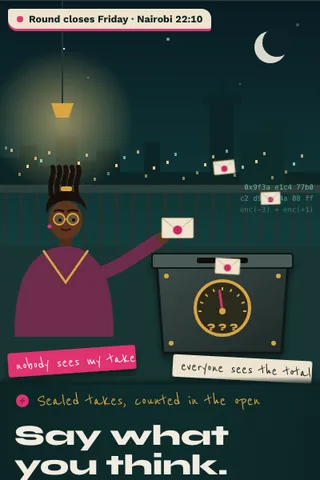
Everyone stakes a conviction, encrypted. The chain tallies it without ever seeing a single take. FHE on Base.
Ready now
$20Fhenix
 Try it live
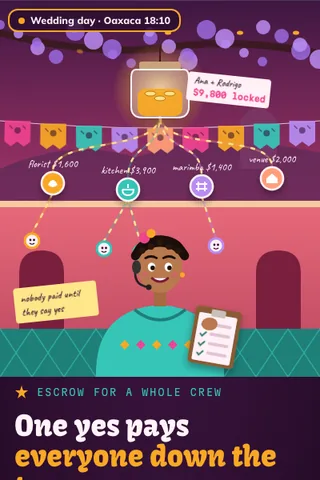
Post a big job with the money in it; when you say yes, everyone down the subcontract tree is paid in the same second.
Try it live, freeA wedding budget goes in at the top. The planner hires a florist, a caterer and a band out of it, and they hire too. Nobody is paid until the customer approves, then the whole tree settles in one transaction, or refunds whole.
The full app from Terry's Arc portfolio: live surface, contracts on Arc, about page, handover of code and deployment.
Reshape it entirely: new features, your flows, your brand end to end, integrations you need. We scope it with you.
All or nothing settlement of a whole subcontract tree in one transaction was not found.
Escrow marketplaces; Request Network.
Checked with web searches in October 2026. A search is not proof that nothing similar exists, and the market moves fast, so we recheck before every build.
Answers Arc's Request for Builders; check current terms.
The complete Cascade app: planners put a client's whole budget in a tree escrow on Arc, vendors and their helpers join with embedded wallets, and one yes pays everyone in the same transaction or refunds the whole budget, with a paywall built in.
Every buyer gets the same finished app. Basic branding and copy changes come through a quick form.
Your admin side: revenue, paywall editor, users, rules and the agent log.
Referral and growth mechanics, switched on when you are ready to grow.
A small fee on every settled job, taken inside the settlement transaction, plus monthly plans for planners and agencies who run many jobs.
0.5% of the budget per settled job, capped at $40, both set by the owner. Arc network fees are around a cent in USDC per transaction.
Prices are yours to set. Illustrative, not a promise of income.
Post a big job with the money in it; when the client says yes, everyone down the subcontract tree is paid in the same second.
Problem: Weddings, events and renovations run through chains of subcontractors. The people at the bottom are paid last, often weeks late, and planners front money from their own accounts.
Solution: One escrow per job holds the budget as a tree of capped lines. Nobody is paid before approval, then every line settles in one transaction on Arc, or the whole budget is refunded.
Why now: Arc settles in under a second with fees paid in USDC, and embedded wallets let a flower truck driver get paid without a seed phrase.
Market: Event and wedding planners first, then renovation contractors and film productions: every industry where work flows through subcontract chains.
The ask: Pilot with three planners and their regular vendors, an audit of the small tree escrow contract, and introductions to licensed off ramp partners.
Funding is never guaranteed. Check each program's rules.
Many hackathons require code written at the event. See the Regatta Boardfor each race's rule.
Custom work covers your brand, other industries such as renovations or productions, extra approval rules, partner integrations like a specific off ramp, and contract changes, scoped on a call.
Big jobs like weddings, events and renovations run through a chain of subcontractors. The people at the bottom of the chain are paid last, often weeks late, because every layer waits on the one above. Planners front money from their own accounts.
Escrow marketplaces and Request Network already hold or invoice payments between a client and a provider. What we did not find is all or nothing settlement of a whole subcontract tree in one transaction: every branch capped by its parent, nobody paid before the client approves, then everyone paid in the same transaction or the whole budget refunded. Escrow itself is not new; the tree and the atomic settlement are.
The tree (payee addresses, amounts, parent of each line, hiring caps), the approvers, deadline and referee, and the single settlement or refund transaction. Quotes, menus, contracts, names and phone numbers stay in the app, off chain.
Everyone who works on a job should be paid when the customer says yes, not when the money finally trickles down to them.
Paid before the last song The helper at the bottom of the tree is paid in the same second as the planner at the top.
Nothing to chase The money is visible and locked from day one, so planners stop fronting and chasing.
Monday board Planners open the app weekly to see which trees are building, due for approval or settled.
Wallets: Embedded wallets (for example Privy) for clients, planners and vendors, holding USDC on Arc, where fees are paid in USDC.
Tree escrow contract: One contract per job holds the budget and a tree of lines. Each line has a payee, an amount and a parent; the contract rejects any edit where children sum to more than their parent or exceed the hiring cap.
Atomic settlement: On approval the contract pays every line in one transaction. If any transfer would fail the whole transaction reverts, so nobody is half paid. Refund returns the whole budget to the client in one transfer.
Preflight checker: An off chain service simulates the settlement before approval and checks every address. A small model tier (for example Claude Haiku) writes plain warnings for planners; it never moves money.
Approvals and referee: Client approval by one or both named people; after the deadline a named referee may settle whole or refund whole, nothing in between.
Off ramp: Vendors who want local currency cash out through a licensed off ramp partner of their choice; the app links out and holds no fiat.
Per job: one deposit, a handful of tree edits and one settlement on Arc, each expected to cost around a cent in USDC (check current Arc fee terms), plus about $0.02 of small model calls for preflight warnings. A planner running 30 jobs a year spends a few dollars in network and model costs.
Every settlement pays every vendor in the tree, and each one sees how it worked. Florists and bands who hire helpers start asking their other planners to use it.
Disputes about quality: All or nothing is blunt. Named referees and per line cancellation terms written into the tree soften it; it is not a court.
Vendor cash flow: Vendors still need deposits for supplies. Trees can include small lines that release at booking, made visible to the client.
Public amounts: Addresses and amounts are public on a public chain. Names stay in the app; vendors can use fresh addresses per job.
Regulation: Holding client funds can be regulated in some places. The contract is non custodial, but owners should get local advice before launching.
Contract risk: Small, audited contract, capped budgets in early versions, no admin key that can move funds.
Costs and tools are estimates at the time of writing. General information only, not legal or financial advice.
Nine routes from one vessel. Tap a port to open its chart.
Cascade: Post a big job with the money in it; when you say yes, everyone down the subcontract tree is paid in the same second. Using someone else's version means their rules, their brand and their revenue. Owning Cascade means it is deployed under your wallet, carries your name, and every customer, partner and result builds your track record instead of theirs.
Cascade arrives deployed with a guide. Running it is settings and sharing links, not code. If you get stuck, we help you ship it.
Start with ten people you already know. The first move below takes under an hour and tells you fast whether people care.
Each step is sized in minutes. Most owners spend an hour a week, and the app does the repetitive part.
Nothing is guaranteed. The playbook gives you a clear path and honest numbers, and you decide how far to take it.
Charge the people who get the most value from Cascade: a monthly plan for groups or teams, plus setup fees for anyone who wants it done for them.
Illustrative stages, not a forecast. Results depend on you and the market; nothing here is guaranteed.
A starter chart. A fuller, app-specific playbook is being written.
LIVE DEMOEveryone stakes a conviction, encrypted. The chain tallies it without ever seeing a single take. FHE on Base.
 LIVE DEMO
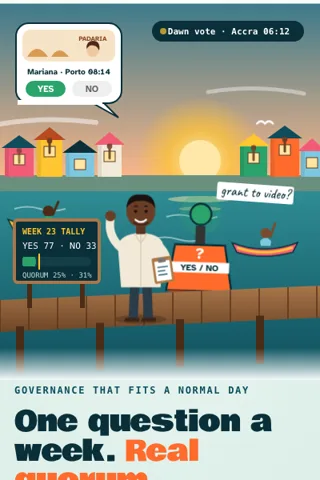
Governance by text-sized questions: one decision a week, answered in ten seconds, with real quorum.
 LIVE DEMO
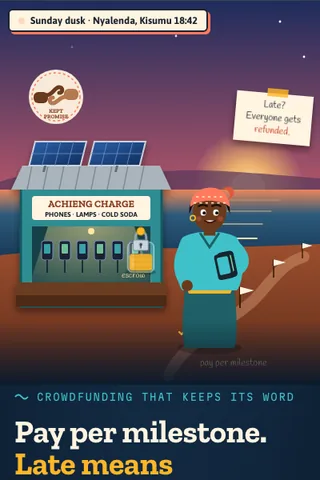
Crowdfunding where backers get refunded by contract if the goal or the milestones are missed.
 LIVE DEMO
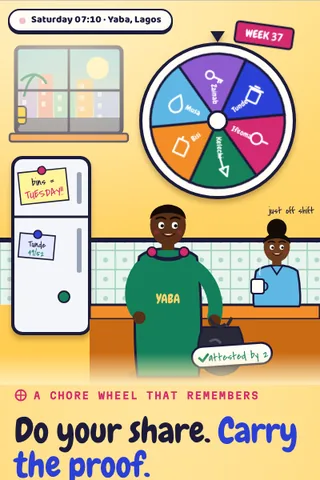
A shared house or club tracks who did the work, and the record becomes everyone's portable reliability score.
 LIVE DEMO
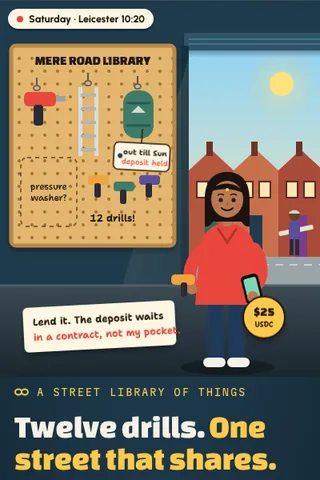
Lend the ladder, the drill, the tent: a street library of things with deposits held by contract.
 LIVE DEMO
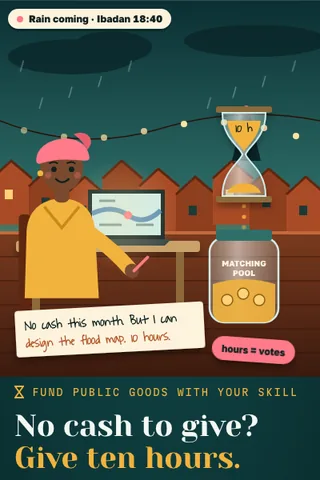
Fund a public good with hours of your skill, not just money, and get matched like a donation.
 LIVE DEMO
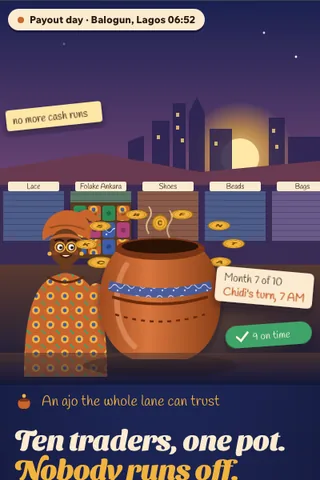
A rotating savings circle (ajo, susu, chama) with payouts enforced by contract and trust scores for members.
 LIVE DEMO
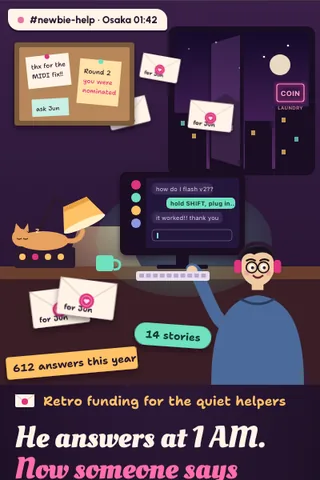
Retro funding for the quiet helpers: the community nominates who mattered, a pot pays them.