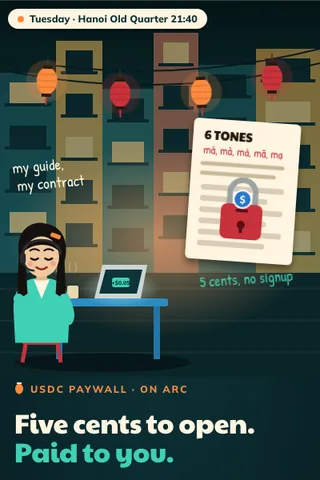
 LIVE DEMO
USDC Paywall
Lock content behind a fraction-of-a-cent USDC payment, on your own Arc contract. Deploy it, become the onchain creator.
Ready now
$20Arc
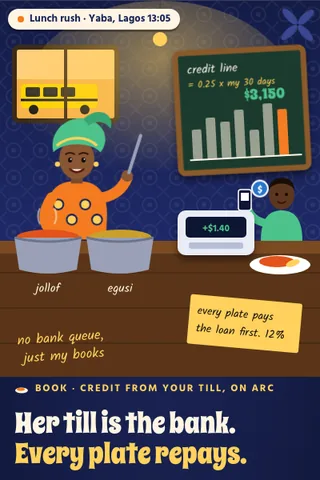 Try it live
A till that borrows for itself: the credit line is a sum over live books and every sale repays the loan.
Try it live, freeAmaka sells three hundred plates a day through a till on Arc. Lenders fund a pool beside it, the line is a published formula over her books, and each sale pays interest and a slice of principal first.
The full app from Terry's Arc portfolio: live surface, contracts on Arc, about page, handover of code and deployment.
Reshape it entirely: new features, your flows, your brand end to end, integrations you need. We scope it with you.
Revenue based credit computed from onchain till postings every second was not found.
Revenue based financing (Clearco) off chain; Huma.
Checked with web searches in October 2026. A search is not proof that nothing similar exists, and the market moves fast, so we recheck before every build.
Answers Arc's Request for Builders; check current terms.
The complete Book app: daily sellers take USDC at a till on Arc, see a public credit line computed from their real sales, borrow from a pool and repay a slice of every sale, with a paywall and helper agent built in.
Every buyer gets the same finished app. Basic branding and copy changes come through a quick form.
Your admin side: revenue, paywall editor, users, rules and the agent log.
Referral and growth mechanics, switched on when you are ready to grow.
Traders never pay to see their own books or to borrow through the app. The owner earns a share of each pool's published flat fee on draws, a small monthly plan for traders who want planning tools, and a monthly plan for cooperatives that run their own pool.
Each pool publishes a flat fee on draws (5% by default); the owner keeps a 20% share of it. Arc gas is paid in USDC, well under a cent per sale.
Prices are yours to set. Illustrative, not a promise of income.
Credit for daily sellers, computed in public from their own USDC till on Arc and repaid one sale at a time.
Problem: Food sellers and shop owners trade every day but cannot borrow fairly: banks want collateral and months of paperwork, and app lenders charge punishing rates on rigid due dates that ignore slow weeks.
Solution: A USDC till on Arc whose postings feed a published formula. Lenders fund a pool, traders draw against their real sales, and the settlement of every sale repays a fixed slice first.
Why now: Arc settles USDC in under a second with gas paid in USDC, embedded wallets remove seed phrases, and small models make an always on bookkeeper cheap enough for a single stall.
Market: Hundreds of millions of informal daily sellers, starting with market cooperatives in Lagos, and the cooperatives, diaspora circles and licensed lenders who want to fund them on terms they can read.
The ask: A pilot with one market cooperative acting as the licensed lender, and builder support from Arc and Circle programs.
Funding is never guaranteed. Check each program's rules.
Many hackathons require code written at the event. See the Regatta Boardfor each race's rule.
Custom work from $2,500: your own pool terms and lender onboarding, integrations with a cooperative's ledger or a licensed offramp, local languages, or a branded deployment for a market association. Scoped on a call.
Small food sellers and shop owners trade every day but cannot borrow on fair terms: banks want collateral and months of paperwork, and app lenders charge punishing rates on rigid due dates that ignore slow weeks.
Revenue based financing already exists off chain (Clearco and merchant cash advances repay as a share of card sales), and onchain credit protocols such as Huma Finance lend against receivables and payment flows. What we could not find is a credit line computed every block from a merchant's own onchain till postings, with the holdback taken inside the same settlement as each sale and the formula public to lenders. The primitives exist; the packaging around a USDC till on Arc is the new part, so novelty is medium.
Till postings on Arc (sale amount, payer address, refunds), the pool's published formula terms, draws and repayments, and agent flags for looping or refunded payments. Item level orders and the owner's identity stay offchain in the till app.
Let anyone who sells every day borrow against what they actually sell, and repay at the pace their trade allows.
The line is a formula Owners see exactly why their line is what it is, and watch it grow as trade grows.
No due date to miss Every sale repays a fixed slice, so a slow week means smaller repayments, not a default notice.
A public Friday board Sales, repaid and line open on one chalkboard card owners like to share with other traders.
Till and wallets: A USDC till on Arc where customers pay by QR from any wallet; the owner signs in with a Privy embedded wallet and passkey.
Pool and line contract: An ERC-4626 style lender pool per market on Arc. A line contract reads the till's posting history and enforces line = multiplier x 30 day net sales minus outstanding.
Holdback in settlement: The till's settlement function splits each sale: the holdback percentage goes to the pool until the draw plus flat fee is repaid, the rest goes to the owner in the same transaction.
Indexer: A Ponder or Goldsky indexer keeps 30 day rolling net sales per till, subtracts refunds immediately, and exposes the numbers the formula uses.
Wash sale agent: A scheduled agent (a small model such as Claude Haiku for summaries, plain rules for detection) flags payers that receive money back from the till or exceed a daily cap; flagged payments are excluded from the line, never from the owner's income.
Notifications: Friday board and draw confirmations by WhatsApp Business API or push.
Fiat edges: Owners who need naira cash out through a licensed offramp partner of their choosing; the app shows fees before any conversion.
Arc charges gas in USDC; a split settlement costs well under one cent per sale (check current Arc fees), so 300 plates a day is roughly $1 or less in gas. The agent's daily pass over one till is a few thousand tokens on a small model, about $0.01 a day. Indexer hosting about $50 a month for a few hundred tills. Example month for 200 tills: about $300 in gas and infra.
Each Friday board is a shareable card with the line growing; traders in the same market ask how, and connecting a till is the first step. Lenders follow tills with clean boards.
Lending law: Lending to merchants is regulated in most countries, Nigeria included. Pools must be run by or with a licensed lender or cooperative; the app is software, not the lender.
Lender losses: If an owner stops trading through the till, repayments stop. Lenders can lose money; this is stated before anyone deposits and nothing implies a return.
Gaming the books: Wash sales and self payments can inflate the line; exclusion rules and payer caps reduce this but do not eliminate it.
Routing around the till: An owner can take cash or another wallet to skip the holdback; pools should price this and lower lines when till volume drops.
Privacy: Till postings are public on Arc; customer payer addresses are visible. Owners should be told plainly before they start.
Costs and tools are estimates at the time of writing. General information only, not legal or financial advice.
Nine routes from one vessel. Tap a port to open its chart.
Book: A till that borrows for itself: the credit line is a sum over live books and every sale repays the loan. Using someone else's version means their rules, their brand and their revenue. Owning Book means it is deployed under your wallet, carries your name, and every customer, partner and result builds your track record instead of theirs.
Book arrives deployed with a guide. Running it is settings and sharing links, not code. If you get stuck, we help you ship it.
Start with ten people you already know. The first move below takes under an hour and tells you fast whether people care.
Each step is sized in minutes. Most owners spend an hour a week, and the app does the repetitive part.
Nothing is guaranteed. The playbook gives you a clear path and honest numbers, and you decide how far to take it.
Charge the people who get the most value from Book: a monthly plan for groups or teams, plus setup fees for anyone who wants it done for them.
Illustrative stages, not a forecast. Results depend on you and the market; nothing here is guaranteed.
A starter chart. A fuller, app-specific playbook is being written.
LIVE DEMOLock content behind a fraction-of-a-cent USDC payment, on your own Arc contract. Deploy it, become the onchain creator.
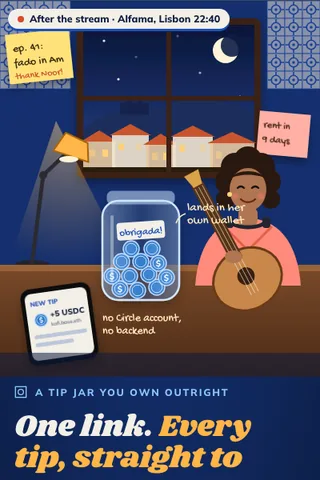 LIVE DEMO
Take pay-what-you-want USDC tips on Base, with a live supporters feed read straight from chain. No Circle account, no backend.
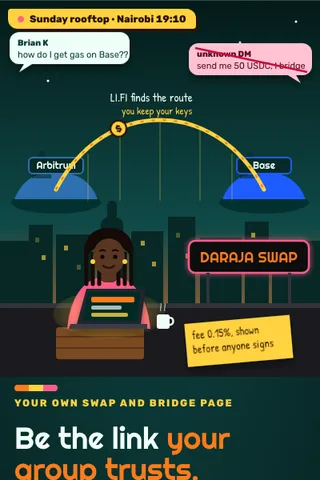 LIVE DEMO
Your own swap/bridge front-end. Integrator fee optional and disclosed.
 LIVE DEMO
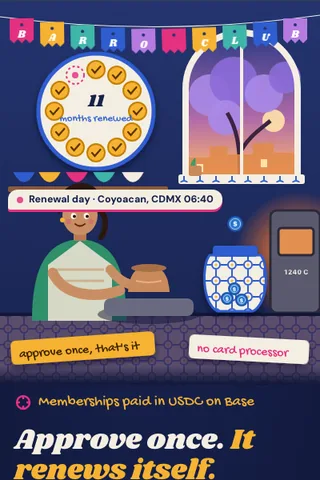
Recurring USDC on Base. Members approve once, it renews itself. No card processor, no contract.
 LIVE DEMO
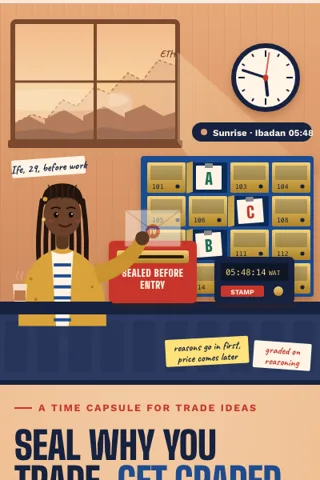
Write why you entered a trade, seal it with the timestamp, and get graded on reasoning, not luck.
 LIVE DEMO
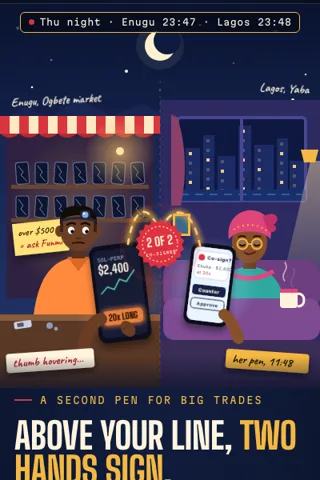
Let a trusted mentor co sign your risky trades above a size you choose.
 LIVE DEMO
Your perp bot follows your rules, and every rule you kept becomes a public, provable track record.
 LIVE DEMO
A tilt brake that delays your trades after losses until you answer one honest question.