 LIVE DEMO
Sealed Take
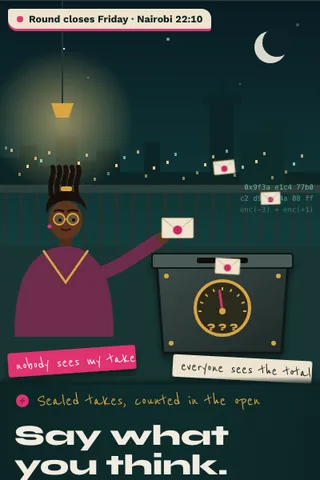
Everyone stakes a conviction, encrypted. The chain tallies it without ever seeing a single take. FHE on Base.
Ready now
$20Fhenix
 Try it live
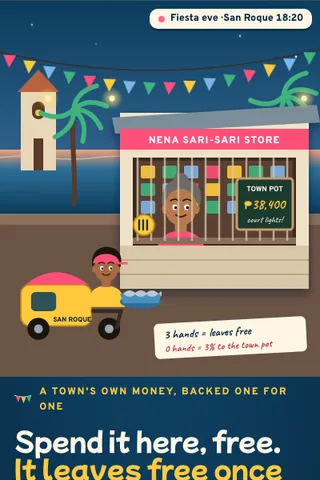
A town's own money that leaves free only after it has gone around.
Try it live, freeSan Roque's money is backed one for one by dollars. Paying anyone in town is free, and cashing out costs only for money that never changed hands in town. What leaving costs goes to a town pot.
The full app from Terry's Arc portfolio: live surface, contracts on Arc, about page, handover of code and deployment.
Reshape it entirely: new features, your flows, your brand end to end, integrations you need. We scope it with you.
Local currency where each unit carries a hand count that sets its exit fee was not found.
Sarafu (Grassroots Economics); local currencies off chain.
Checked with web searches in October 2026. A search is not proof that nothing similar exists, and the market moves fast, so we recheck before every build.
Answers Arc's Request for Builders; check current terms.
The complete Barangay app: a town's own money backed one for one, free to spend at home, with exit fees that fill a town pot, plus a paywall, council desk and helper agent built in.
Every buyer gets the same finished app. Basic branding and copy changes come through a quick form.
Your admin side: revenue, paywall editor, users, rules and the agent log.
Referral and growth mechanics, switched on when you are ready to grow.
Residents never pay to pay each other. Stores pay a small monthly fee for merchant tools and the barangay pays for the council desk. Exit fees belong to the town pot, never to the owner.
Exit fees of 0 to 5% on money that never went around town go to the town pot. Arc gas is a fraction of a cent per transfer.
Prices are yours to set. Illustrative, not a promise of income.
A town's own money that leaves free only after it has gone around.
Problem: Remittances and wages arrive in small towns and leave the same day for city chains, so little money circulates locally and public needs wait for outside funding.
Solution: A USDC backed town currency on Arc: paying neighbours is free, each hand between households is counted, and money that never went around pays a small exit fee into a town pot the community votes on.
Why now: Arc's sub second, USDC native settlement makes free local payments and per unit hand counting cheap enough for a sari-sari store.
Market: Barangays, small towns and municipalities with strong remittance inflows, and the stores and families that live there.
The ask: Pilot partners: two barangays and one remittance partner, plus Arc and Circle developer programs.
Funding is never guaranteed. Check each program's rules.
Many hackathons require code written at the event. See the Regatta Boardfor each race's rule.
Custom work from $2,500: your town's name, language and pot purposes, SMS gateway setup, a remittance partner integration or a municipal deployment. Scoped on a call.
In small towns, remittances and wages arrive and leave almost at once, spent at city malls and online. Local stores, vendors and drivers see little of it, and towns have no simple way to fund their own small projects.
Community currencies are well established: Sarafu by Grassroots Economics runs community vouchers in Kenya, and many local currencies run offchain. Our research did not find a local currency where each unit carries a count of hands in town that sets its own exit fee. The local currency idea is old; the per unit hand count exit fee, paid to a town pot, is the new piece. Novelty is high but untested.
Onchain: the USDC reserve, household wallet transfers, the hand count on each balance lot, exit fees and the town pot. Offchain: the household register kept by the barangay hall, and what anyone bought.
Help a town keep its money moving at home, and let what leaves pay for what the town needs.
Spending at home is free No fee to pay the fish vendor, the tricycle driver or the canteen. The cheapest move is the local one.
Watch the pot grow A Sunday board shows the town pot, the goal and one vote. People see their town fund its own court lights.
Your money's story Each person sees how many hands their pesos passed through this month, and stores that pass money on get a flag on the town map.
Wallets per household: Embedded wallets (for example Circle Wallets or Privy) with phone sign in, one registered household wallet each, approved by the barangay hall.
Town token on Arc: A token minted 1:1 against USDC held in a reserve contract. Balances are kept as lots with a hand count; a transfer to a different household adds one hand, unless the lot returns within 24 hours.
Exit fee contract: Redeeming to USDC charges fee = base x (1 - hands / freeAt), zero at freeAt hands, paid straight to the town pot contract. Parameters are set by an assembly vote and a council multisig (for example Safe).
Fiat rails: A licensed local ramp converts pesos and remittances to USDC; senders abroad can send USDC directly.
Hand counter agent: A small model tier (for example a Haiku or GPT mini class model via OpenRouter) reviews transfer patterns weekly and drafts flags. Council members approve any recount.
Indexer and board: An indexer feeds the Sunday board, the town map and SMS summaries for people without smartphones.
Per transfer: Arc gas is a fraction of a cent in USDC (testnet today; check mainnet fees at launch). Weekly agent review for a town of 3,000 households costs well under $5 in model fees. Example month for one town: around 60,000 transfers, roughly $30 to $80 in gas and models, plus about $50 hosting, before ramp fees.
Remittance families tell relatives abroad to send in town money. Stores put up the pink flag. Neighbouring barangays see the court lights and ask for their own; towns can later accept each other's pesos.
Money rules: Issuing a payment token and holding reserves is regulated. Run with a licensed partner and local government approval; get legal advice.
Gaming the hand count: Wallet loops and fake households. Household registration, the 24 hour return rule and council review limit it.
Privacy: Transfers between household wallets are public. Names stay in the barangay register; purchases are never recorded.
Pot misuse: The pot is held by a multisig and every spend is shown on the board, with an assembly vote for each project.
Reserve risk: The reserve is USDC and depends on its issuer and the ramp. The app shows the reserve live.
Costs and tools are estimates at the time of writing. General information only, not legal or financial advice.
Nine routes from one vessel. Tap a port to open its chart.
Barangay: A town's own money that leaves free only after it has gone around. Using someone else's version means their rules, their brand and their revenue. Owning Barangay means it is deployed under your wallet, carries your name, and every customer, partner and result builds your track record instead of theirs.
Barangay arrives deployed with a guide. Running it is settings and sharing links, not code. If you get stuck, we help you ship it.
Start with ten people you already know. The first move below takes under an hour and tells you fast whether people care.
Each step is sized in minutes. Most owners spend an hour a week, and the app does the repetitive part.
Nothing is guaranteed. The playbook gives you a clear path and honest numbers, and you decide how far to take it.
Charge the people who get the most value from Barangay: a monthly plan for groups or teams, plus setup fees for anyone who wants it done for them.
Illustrative stages, not a forecast. Results depend on you and the market; nothing here is guaranteed.
A starter chart. A fuller, app-specific playbook is being written.
LIVE DEMOEveryone stakes a conviction, encrypted. The chain tallies it without ever seeing a single take. FHE on Base.
 LIVE DEMO
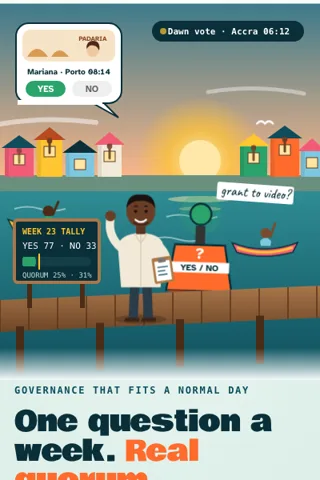
Governance by text-sized questions: one decision a week, answered in ten seconds, with real quorum.
 LIVE DEMO
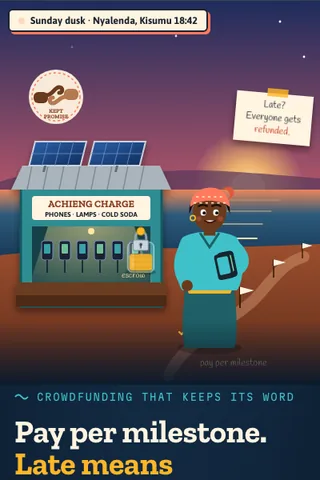
Crowdfunding where backers get refunded by contract if the goal or the milestones are missed.
 LIVE DEMO
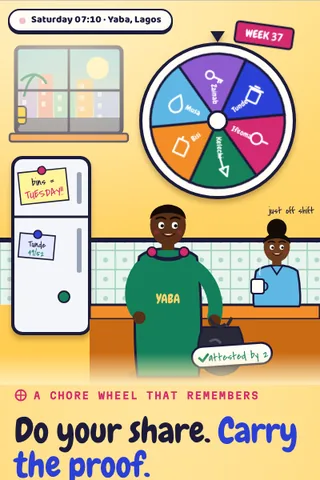
A shared house or club tracks who did the work, and the record becomes everyone's portable reliability score.
 LIVE DEMO
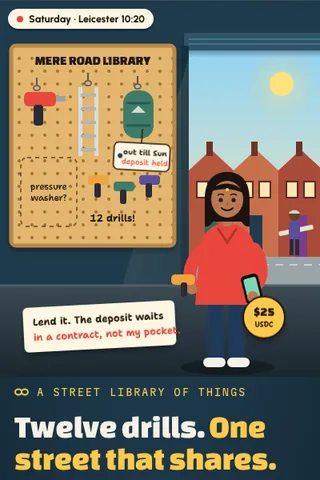
Lend the ladder, the drill, the tent: a street library of things with deposits held by contract.
 LIVE DEMO
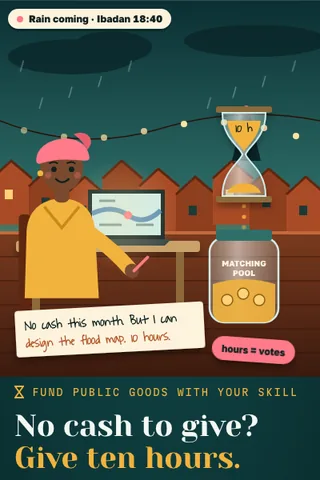
Fund a public good with hours of your skill, not just money, and get matched like a donation.
 LIVE DEMO
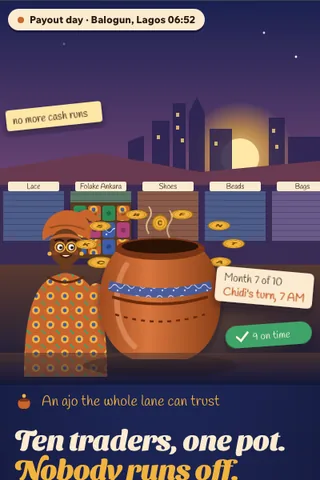
A rotating savings circle (ajo, susu, chama) with payouts enforced by contract and trust scores for members.
 LIVE DEMO
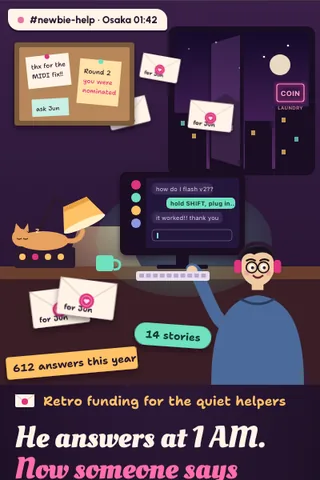
Retro funding for the quiet helpers: the community nominates who mattered, a pot pays them.