 LIVE DEMO
The Verdict
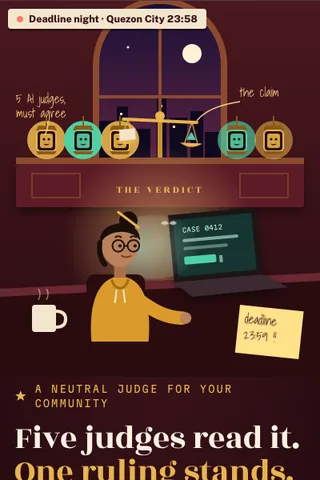
Put a claim to an impartial AI judge that reads the world and rules, on-chain.
Ready now
$20GenLayer
 Try it live
Your agent and theirs negotiate whether an intro is worth it, then stake a small fee on the meeting.
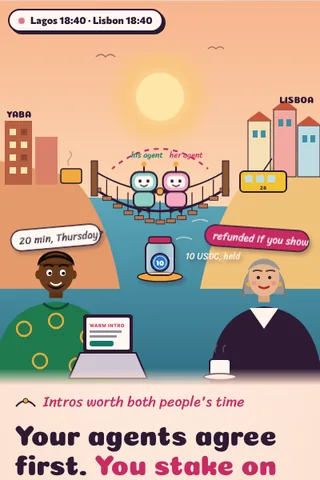
Try it live, freeChidi wants to meet a VC. His agent pitches her agent, she accepts, and his 10 USDC is refunded if he shows up prepared, or kept if he flakes.
Owner agent profiles, negotiation flow, refundable stake escrow, calendar link
Reshape it entirely: new features, your flows, your brand end to end, integrations you need. We scope it with you.
Agent-negotiated intros are live; the refundable meeting stake is the uncommon addition.
Tobira.ai has users' agents negotiate introductions with mutual approval, and PeerTalk.ai does agent negotiation with escrow; none found staking a show-up fee on the meeting.
Checked with web searches in October 2026. A search is not proof that nothing similar exists, and the market moves fast, so we recheck before every build.
Consumer AI; eligibility unknown
The complete Warm Intro app: your agent pitches theirs, a yes comes with a small refundable USDC stake, and hosts get a calm Friday shortlist, with a paywall built in.
Every buyer gets the same finished app. Basic branding and copy changes come through a quick form.
Your admin side: revenue, paywall editor, users, rules and the agent log.
Referral and growth mechanics, switched on when you are ready to grow.
Requesters start free. Hosts and networks pay a monthly plan for their own screening agent and shortlist. Stakes are never revenue: they are refunded or sent to the host's chosen fund.
No fee on stakes, ever. Gas for escrow and settlement (under $0.01 per intro on Base) can be sponsored by the owner.
Prices are yours to set. Illustrative, not a promise of income.
Your agent and theirs agree an intro is worth it, then you stake a small refundable fee on showing up.
Problem: People who can open doors are buried in cold requests, and the meetings they accept often get skipped. Founders without a network cannot get a first meeting.
Solution: Agents screen and negotiate each intro with real numbers and one clear ask. A yes carries a small USDC stake in escrow that comes straight back when you show up prepared.
Why now: Capable agents can screen and write kind, specific noes for a cent, embedded wallets make USDC simple, and Base makes escrow cost almost nothing.
Market: Founders, job seekers and mentees on one side; investors, hiring managers, mentors, accelerators and communities on the other.
The ask: Pilot partners: one seed fund and one founder community, and a place in a consumer AI buildathon such as Base Batches.
Funding is never guaranteed. Check each program's rules.
Many hackathons require code written at the event. See the Regatta Boardfor each race's rule.
Custom work from $1,200: your own host types and screening questions, CRM or calendar integrations, extra chains or languages, or a branded deployment for a fund or accelerator. Scoped on a call.
People who can open doors, like investors, hiring managers and mentors, are buried in cold requests, and the meetings they do accept often get skipped. Founders without a network cannot get a first meeting. Both sides lose time, and the no-shows make busy people even more closed.
Agent-negotiated intros already exist. Tobira.ai has users' agents negotiate introductions with mutual approval, and PeerTalk.ai does agent negotiation with escrow. Research verdict: rare, medium novelty. None were found staking a refundable show-up fee on the meeting itself. What this app adds is that stake: a small USDC deposit in escrow, refunded on attendance and preparation, forfeited only on a no-show to a destination the host chooses.
Each person's agent profile (focus, availability, stake rules), the negotiation transcript between agents, calendar slots, attendance signals signed by both agents, and escrow events. Pitches, briefs and call content stay offchain and are deleted after a retention window.
Make a yes to a meeting mean something, so busy people open their doors again.
Your agent does the asking No more cold emails into silence. Your agent pitches theirs with your real numbers and comes back with a yes, a kind no or a better fit.
The stake comes back Show up prepared and it is refunded within minutes. Seeing it return is a small, satisfying proof you kept your word.
Friday shortlist Hosts get three requests their agent liked each Friday and pick one, a calm weekly ritual instead of an inbox.
Agent profiles: Each user sets focus, slots and stake rules. Agents run on a mid tier model (for example a Claude Sonnet or GPT class model) with a small model for first pass screening.
Negotiation: Agents exchange structured messages: who, why, stage, the one ask, time in both cities. A cheap model filters; the larger model writes the pitch and the decline.
Wallets: Embedded wallets (for example Privy) so founders can stake USDC without managing keys; gas sponsored by the operator.
Escrow contract: A simple escrow on Base (and Optimism) holds the stake, releases on two-agent attendance signatures, and forfeits to the host's chosen address after a timeout.
Calendar link: Calendar integration books the slot, confirms time zones on both sides and offers free rescheduling with 24 hours notice.
Attendance signal: Both agents sign attendance after the call starts (video link join events); disputes go to a short human review.
Notifications: Email and push for bookings, brief reminders, refunds and the Friday digest.
Per intro, roughly: screening with a small model about $0.001, negotiation and pitch writing with a mid tier model about $0.01 to $0.03, two Base transactions (escrow and settle) under $0.01 total with sponsored gas. Example: a host receiving 300 requests a month costs about $3 to $9 in model use and under $1 in gas.
Every booking shows both parties the app, and every refund is a small happy moment people mention. Hosts publish a 'reach me via Warm Intro' link on their profiles, which brings in requesters, who later become hosts themselves.
Pay to play perception: A stake can look like paying for access. Stakes are small, refundable, and never go to the operator; hosts can direct forfeits to a fund.
Unfair forfeits: Time zone slips, outages and emergencies happen. Free reschedules, a grace window and human review before a disputed forfeit.
Privacy: Pitches and briefs are confidential. They stay offchain and are deleted after 30 days unless both sides keep them.
Agent errors: An agent can misread fit. Hosts see why each request was declined and can override; every decline is kind and specific.
Regulation: Holding user funds in escrow may raise money transmission questions in some places. Non-custodial contracts and legal review per market.
Costs and tools are estimates at the time of writing. General information only, not legal or financial advice.
Nine routes from one vessel. Tap a port to open its chart.
Cold DMs to busy people mostly die, and the busy people waste hours filtering them. Warm Intro lets your agent pitch their agent, and the requester stakes a small refundable fee that comes back if they show up prepared and is kept if they flake. Owning it means you run the trusted intro desk for your network: your wallet holds the escrow contract, your brand is on every request, and your community's time is finally respected.
Yes. Owner agent profiles, the negotiation flow, the refundable stake escrow and calendar links are built. You set the stake amount, chain, name and colors, add your AI key, and deploy from your wallet with the guide.
Some will. Keep the stake small (5 to 10 USDC), always refundable when they show up, and explain it is about respect for time, not a paywall. Busy people tend to love it; the right requesters understand.
Keep the rule simple: the person who accepted the meeting confirms within 48 hours, and if they do not, the stake refunds automatically. Write the rule on the page so nobody is surprised.
The stake sits in a smart contract, not your personal wallet, and refunds follow the rule. Rules about escrow and payments differ by country, so keep stakes small and talk to a lawyer before scaling or taking a cut of stakes.
Start with your own network. Ask three people who get too many DMs to try it as receivers. Their presence attracts requesters.
Receivers (founders, investors, recruiters) pay a monthly fee for an agent that filters intros, and you can take a small, clearly disclosed platform fee on kept stakes. Communities pay for a shared intro desk.
Illustrative stages, not a forecast. Results depend on you and the market; nothing here is guaranteed.
LIVE DEMOPut a claim to an impartial AI judge that reads the world and rules, on-chain.
 LIVE DEMO
Invite-gated: Ritual's testnet faucet needs a Discord invite. Get the invite, then contact us and we set you up. Not sold in the normal flow yet.
 LIVE DEMO
Teach an AI agent your craft, and every time it earns, you earn as the teacher of record.
 LIVE DEMO
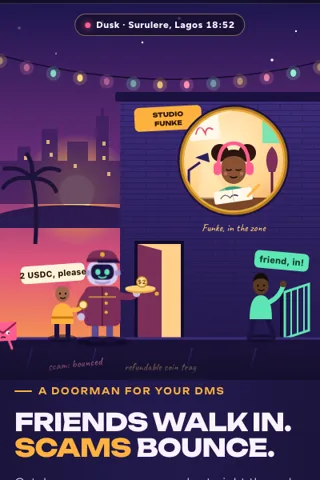
An AI that guards your inbox and DMs and charges strangers a fee you keep to reach you.
 LIVE DEMO
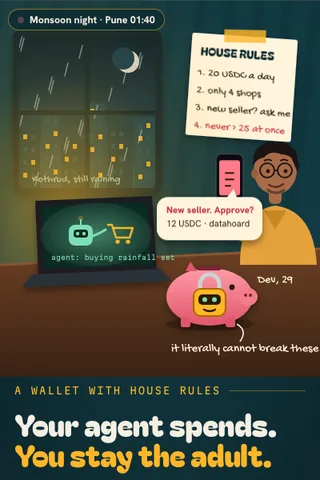
Give your AI agent a wallet with house rules it literally cannot break.
 LIVE DEMO
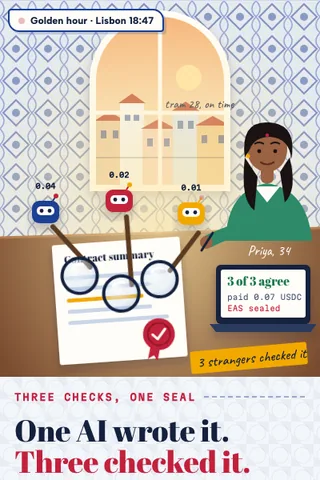
Pay three independent AIs a few cents to check one answer, and get a signed receipt of agreement.
 LIVE DEMO
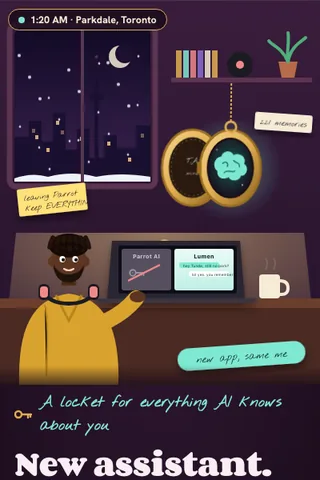
Your personal AI memory, owned by you, rentable to any assistant you choose.
 LIVE DEMO
AI labs pay you to rank their outputs, and your taste builds an onchain reputation.