 LIVE DEMO
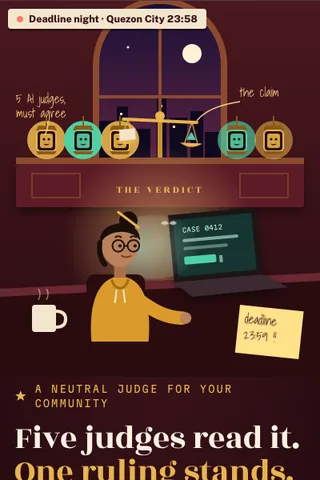
The Verdict
Put a claim to an impartial AI judge that reads the world and rules, on-chain.
Ready now
$20GenLayer
 Try it live
Pool your community's data, license it to AI builders together, and split revenue by contribution.
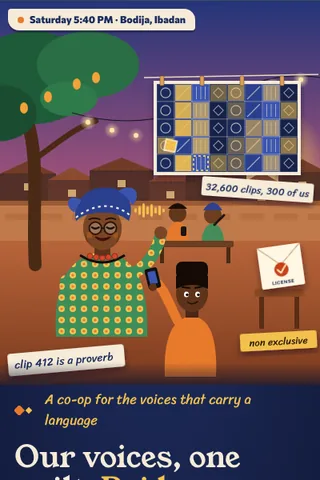
Try it live, freeA group of 300 Yoruba speakers record phrases. A lab licenses the set; the co-op contract pays each member by their accepted clips.
Contribution uploader, review queue, license sale page, pro-rata payout contract
Reshape it entirely: new features, your flows, your brand end to end, integrations you need. We scope it with you.
A white-label co-op is a packaging of Vana's live DataDAO model, not a new mechanic.
Vana lets communities launch DataDAOs that pool member data, vote on licensing to AI companies and reward contributors (Reddit Data DAO, DNA DAO).
Checked with web searches in October 2026. A search is not proof that nothing similar exists, and the market moves fast, so we recheck before every build.
Public goods; must be open source
Existing projects OK
The complete Data Commons Co-op app: a community records clips in its own language, neighbours review them, members vote on every license, and the contract pays each member by accepted clips, with a paywall and steward agent built in.
Every buyer gets the same finished app. Basic branding and copy changes come through a quick form.
Your admin side: revenue, paywall editor, users, rules and the agent log.
Referral and growth mechanics, switched on when you are ready to grow.
The operator takes a fee on each license and co-ops pay a monthly plan; members never pay.
Operator fee of 15% on each license by default; 85% of the rest goes to members, 10% to reviewers, 5% to the treasury.
Prices are yours to set. Illustrative, not a promise of income.
The people who carry a language decide who learns from it, and share in every fee.
Problem: Speech datasets for regional languages are scraped or bought cheaply, and speakers have no say and no share.
Solution: A member co-op with consent, peer review, voted licenses with blocked terms, and contract payouts by accepted clips.
Why now: Speech labs need regional language data and stablecoin payouts reach phones anywhere.
Market: Language communities and the labs that license them, run by operators for a fee.
The ask: License the Bodija set to two speech labs and launch a second co-op.
Funding is never guaranteed. Check each program's rules.
Many hackathons require code written at the event. See the Regatta Boardfor each race's rule.
New languages, kiosk recording, buyer portals and mobile money payouts, scoped on a call from $1,000.
Speakers of under-served languages, patients, drivers and creators produce exactly the data AI builders want, yet it is usually scraped or bought from a middleman, with no say for the people it came from and no share of the fee.
This already exists. Vana lets communities launch DataDAOs that pool member data, vote on licensing to AI companies and reward contributors (for example Reddit Data DAO and DNA DAO). Research verdict: exists, low novelty. This app is a white-label packaging of that model for one community: a contributor uploader, peer listening review, license terms the members fix in advance (such as no voice cloning, no exclusivity), a member vote on each offer and a pro-rata payout contract. The mechanism is not new; the value is a ready, plain co-op a community leader can own and run.
Member contributions (audio or text) stored encrypted offchain, with transcripts and consent records; peer review scores; a voice or content fingerprint per item for duplicate checks; a Merkle root of accepted contributions per member; license terms hashes, member votes and USDC payment and payout records onchain.
The people who carry a language or a body of knowledge decide who learns from it, and share in every fee it earns.
Your square on the quilt Every accepted contribution lights a square. Members see their part of the whole grow week by week.
Nobody sells alone Each license offer goes to a member vote under rules fixed in advance. People who were never asked before now decide.
Saturday sessions A weekly prompt to record ten items and listen to twenty five, with a streak. Buyers' requests shape the prompt.
Member wallets: Privy embedded wallets on Base (or Polygon or Celo for low fee regions), phone number sign in, no seed phrase. Each member signs a consent record once.
Contribution store: Clips upload to encrypted object storage (for example S3 with per-co-op keys, or Lit-encrypted IPFS). Only hashes and counts are public.
Steward agent: A screening pipeline: loudness and length checks, Whisper class transcription to compare against the written text, and a voice fingerprint for duplicates. A small model (for example Claude Haiku tier) writes friendly return notes. It flags and sorts; human listeners accept or reject.
Peer review and voting: Two or three member listeners score each clip. License offers go to a vote, with Snapshot style offchain signatures or an onchain governor for the final tally, and rule changes need two thirds.
License and payout contract: A buyer pays USDC into the co-op contract against a license terms hash. A Merkle distributor pays members pro rata to accepted clips (optionally with an equal floor), plus listener and treasury shares.
License page and data room: A public page describing the dataset, terms and price; approved buyers get time-limited, watermarked access to the encrypted set.
Per clip: transcription for a 12 second clip is well under 1 cent on hosted Whisper class APIs, fingerprinting is negligible, and a small model return note is a fraction of a cent. Storage for 32,600 clips of about 200 KB each is about 6.5 GB, a few dollars a month. Onchain, a license payment plus one Merkle root and a claim per member on Base typically costs cents each. Example month for a 300 member co-op adding 6,000 clips: about $15 transcription, $5 storage, $30 hosting and indexing, under $10 gas, roughly $60 total.
Members recruit relatives and neighbours because the quilt grows faster with more voices and the Saturday prompt is social. Each paid license produces a share card. Buyers who license once come back for new prompts, and other language communities copy the co-op once they see a payout.
Consent and voice misuse: Voices are biometric. Explicit consent per member, a hard ban on cloning by default, watermarked buyer access and license terms that can be enforced in court. Comply with the Nigeria Data Protection Act 2023 and similar laws.
Small payouts disappoint: Most members will earn tens of dollars per license, not a living. The app must say so plainly and never present future licenses as expected income.
Bias in automatic screening: Tonal languages and older voices can be misread as noise. Automatic checks only flag; humans decide, and acceptance rates are tracked by age group.
Fraud and duplicates: Copy rings and pitch-shifted re-uploads. Fingerprinting, first-uploader credit and a hold period for new members, with human review of disputes.
Buyer leaks the set: Once licensed data is copied it cannot be recalled. Watermarking, limited access windows and contract terms reduce but do not remove this risk.
Securities and tax questions: Payouts are licensing income, not an investment. Avoid any tradable share token, and give members plain tax summaries.
Costs and tools are estimates at the time of writing. General information only, not legal or financial advice.
Nine routes from one vessel. Tap a port to open its chart.
When a platform collects your community's language, recipes or recordings, the platform sells it and the people who made it get nothing. When you own Data Commons Co-op, the uploader, review queue, license page and payout contract run under your co-op's name and wallet, so every license sale pays members by their accepted contributions. Your culture earns for the people who carry it, and you hold the record of who gave what.
Yes. Members upload through a page, reviewers accept or reject in a queue, and the payout contract splits sales by accepted items. The build arrives deployed; your job is people and quality.
Some buy niche, consented, well labeled data, especially low resource languages and specialized domains. Many will not. Expect a slow first sale and plan for small licenses first. Nothing here is guaranteed.
Honestly, the model is live on Vana. Owning yours means your co-op name, your chain and your own license terms without depending on one network. If your community is happy on Vana, use Vana.
You need clear consent, a plain license explaining who can buy it and for what, and a way to remove contributions. Voice and personal data have extra rules in many countries. Get local advice before your first sale.
Set the rules before anyone uploads: pay per accepted item, how reviewers are chosen, the co-op's cut. Put them on the page. Clear rules early prevent most fights.
The co-op takes a fee on each license sale (for example 15 percent) and the rest pays members. As the owner you also earn setup and operating fees if you run co-ops for other communities. This is a target, not a promise.
Illustrative stages, not a forecast. Results depend on you and the market; nothing here is guaranteed.
LIVE DEMOPut a claim to an impartial AI judge that reads the world and rules, on-chain.
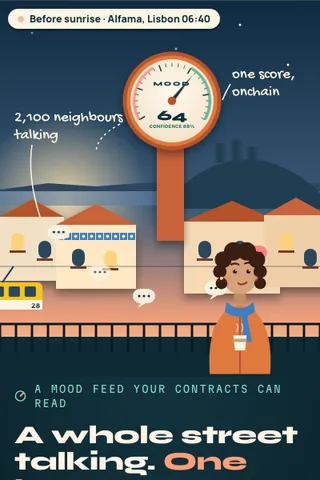 LIVE DEMO
Invite-gated: Ritual's testnet faucet needs a Discord invite. Get the invite, then contact us and we set you up. Not sold in the normal flow yet.
 LIVE DEMO
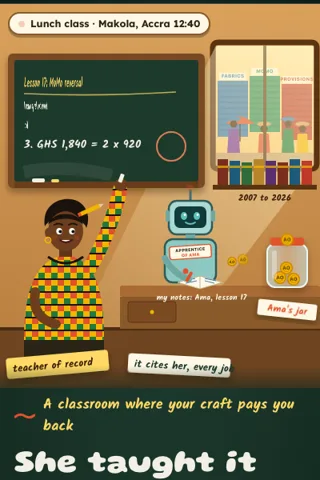
Teach an AI agent your craft, and every time it earns, you earn as the teacher of record.
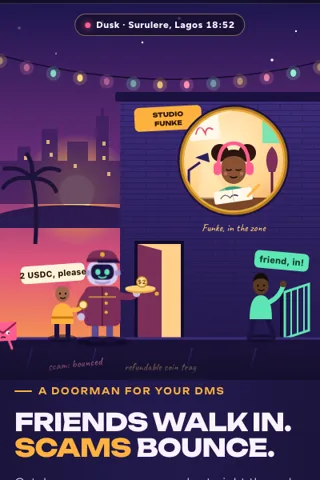 LIVE DEMO
An AI that guards your inbox and DMs and charges strangers a fee you keep to reach you.
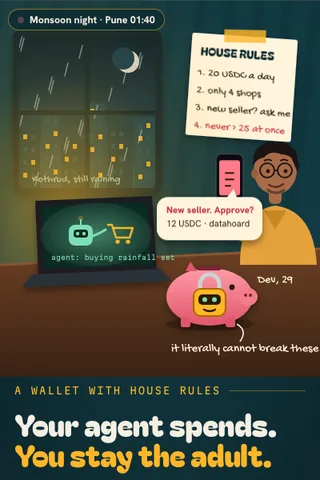 LIVE DEMO
Give your AI agent a wallet with house rules it literally cannot break.
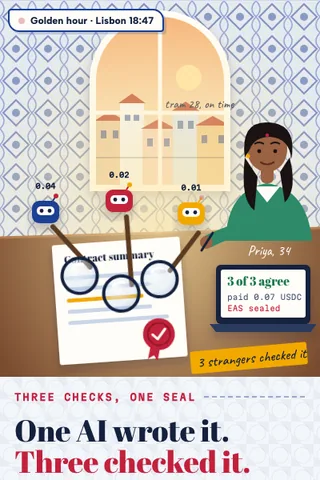 LIVE DEMO
Pay three independent AIs a few cents to check one answer, and get a signed receipt of agreement.
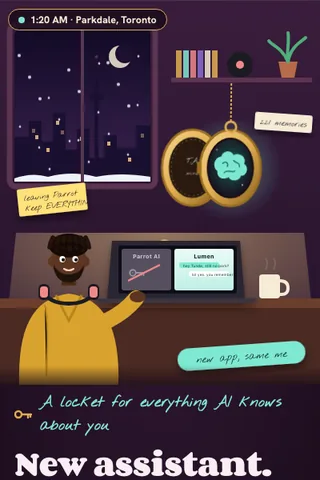 LIVE DEMO
Your personal AI memory, owned by you, rentable to any assistant you choose.
 LIVE DEMO
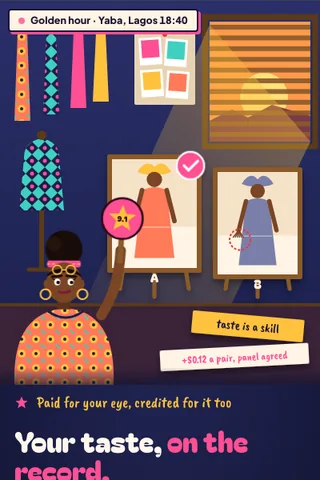
AI labs pay you to rank their outputs, and your taste builds an onchain reputation.